Individual assignment

2 weeks
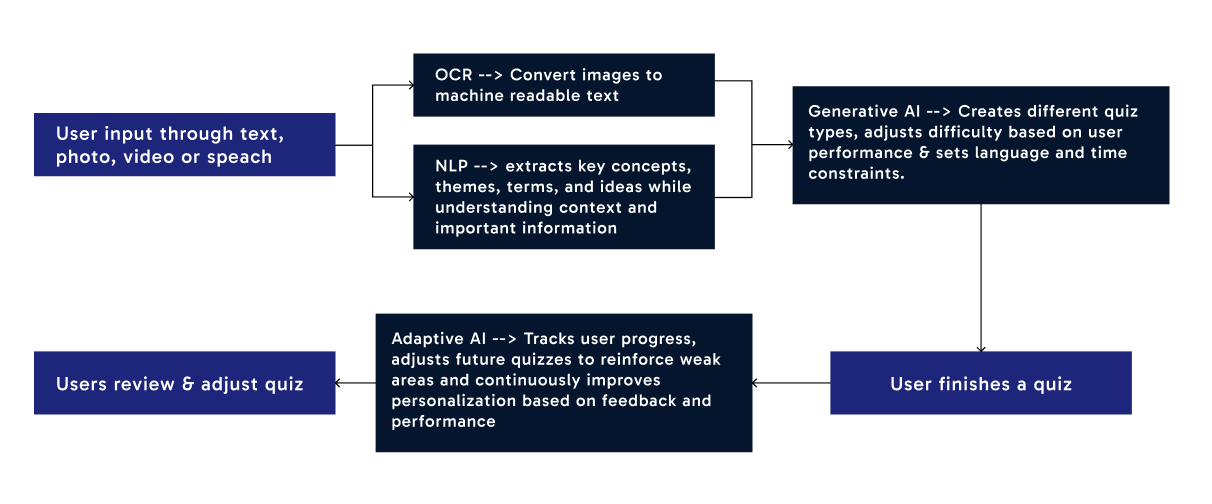
In this project, I used my skills and empathy as a UX designer to explore the challenge students face when studying on a lot of complex literature. I developed a user-centered, accessible and inclusive design solution integrated with artificial intelligence such as OCR, ASR, NLP, generative AI och adaptive algorithms to provide students with an efficient and personal study method. I concluded with validating the technical feasibility of the concept.
I completed this assigning during the course "Human-centered artificial intelligence" at Halmstad University.
Delivery: High-fidelity prototypes in Figma
- Current tools are often static and require manual effort.
- Existing solutions rarely adapt to individual learning styles and abilities
- Lack of personalization and gamification reduces efficiency, attention and motivation.
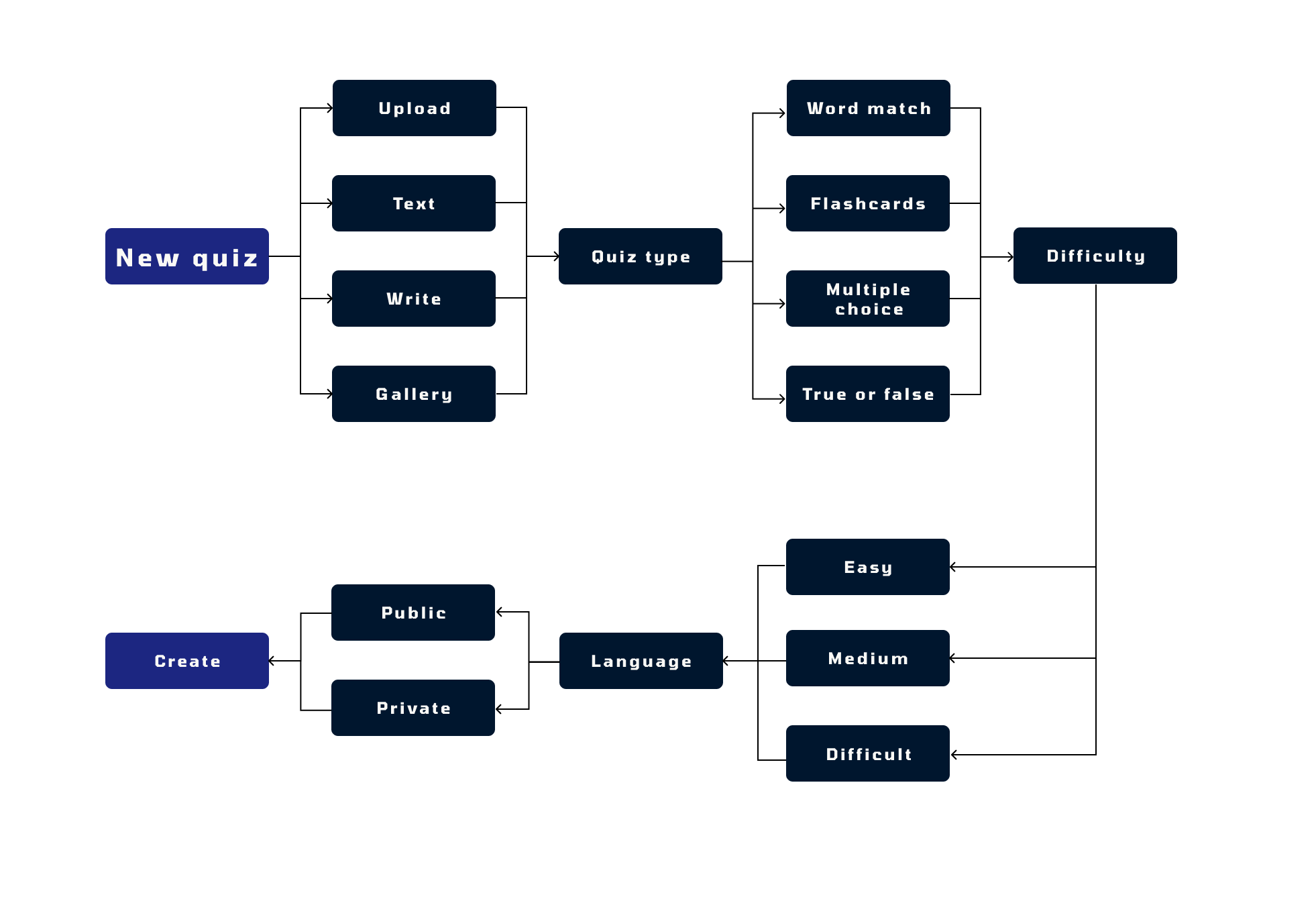
- Adaptive algorithms adjust quiz difficulty, type and language based on the student’s needs and progress.
- Users stay in control, with the ability to edit, approve and customize AI-generated content.
- Inclusive design and accessibility features make the platform usable for diverse learners.
- Community features allow sharing and using peer-created quizzes for broader learning opportunities.
- I found it very interesting how AI can be used in design to personalize user experiences by adapting interfaces, content and interactions to individual needs progress.
- I reflected on the importance of giving users control over AI and how designing for autonomy and trust requires constantly questioning when AI should assist.
- I was continually reminded of the technical feasibility such as AI limitations and system constraints that shapes solutions which are both innovative and realistic.


Users review all AI-generated questions before adding them to their study flow.
Every item can be edited, removed or refined at any time.
Transparency and flexibility ensures that the system feels collaborative and not automated.

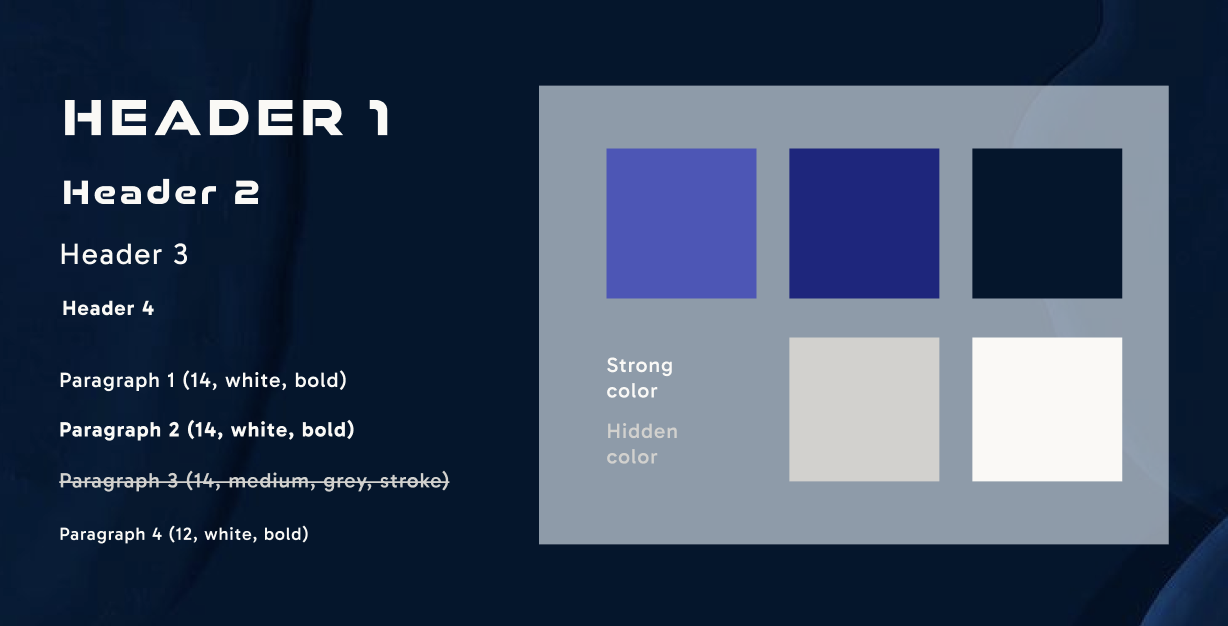
High contrast, readable font sizes and inclusive color choices. Ensures usability for all students, including those with visual or cognitive impairments.
Headings, text size and color guide the user through content.
The design highlights the important information while keeping secondary details subtle though hierarchy and color.

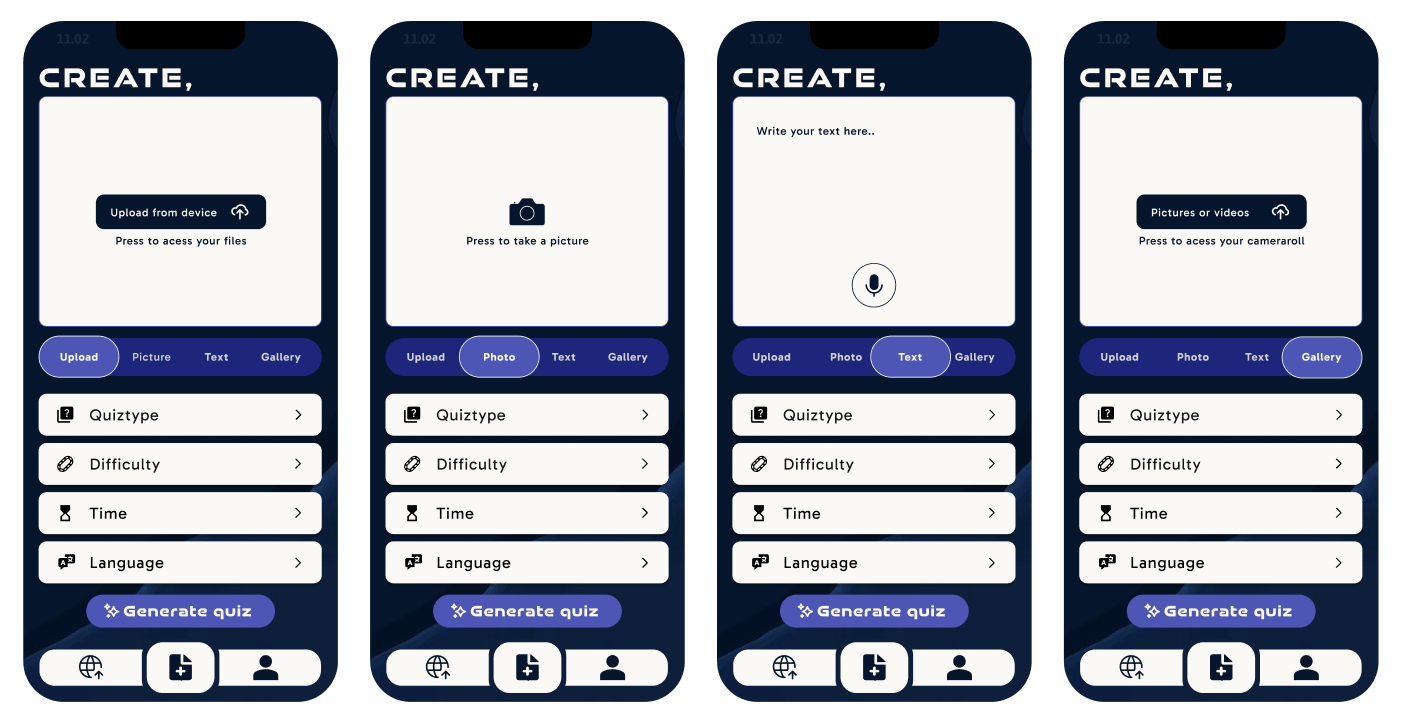
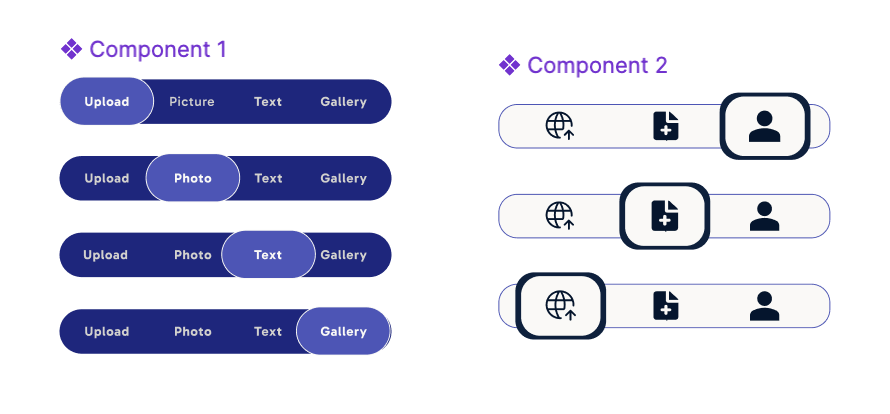
Menus, buttons, and interactive elements are usable via multiple methods (keyboard, voice, touch, upload).
The design support visual, auditory, kinesthetic and text-based learning methods.
The system is readable and understandable through clear instructions.
Functions are hidden to avoid overwhelming the user with too much information at once.
Simple structure supports navigation for users with different abilities.
Similar functions behave consistently throughout the entire app.

The concept of using quizzes combined with personalized learning through algorithms and user data is well-established, with systems like Quizlet offering similar features. However, the implementation of AI is constantly evolving and optimizing algorithms for effectiveness and accuracy presents challenges. While technically feasible, these features require careful handling of data, robust database solutions, and continuous algorithmic optimization to ensure fast and accurate results.


Speech recognition
Enables dictation in multiple languages using readily available modules.
Natural Language Processing (NLP)
Analyzes text uploaded by users to identify patterns and correlations. While large datasets exist to support this, manual curation is necessary to ensure balanced and representative data. This improves the accuracy and relevance of the system over time.
Generative AI
Generates quizzes and learning materials based on user input. Training and fine-tuning are required to handle various input types, including handwritten notes, incomplete documents, grammatical errors, and slang.
Considerations and risks
- AI cannot replicate human interaction or emotional intelligence, and misinformation risks must be mitigated.
- The system maintains user responsibility for learning tasks, reducing the risk of passivity.
- Privacy and data security are prioritized, with clear communication about what data is collected and how it is used.


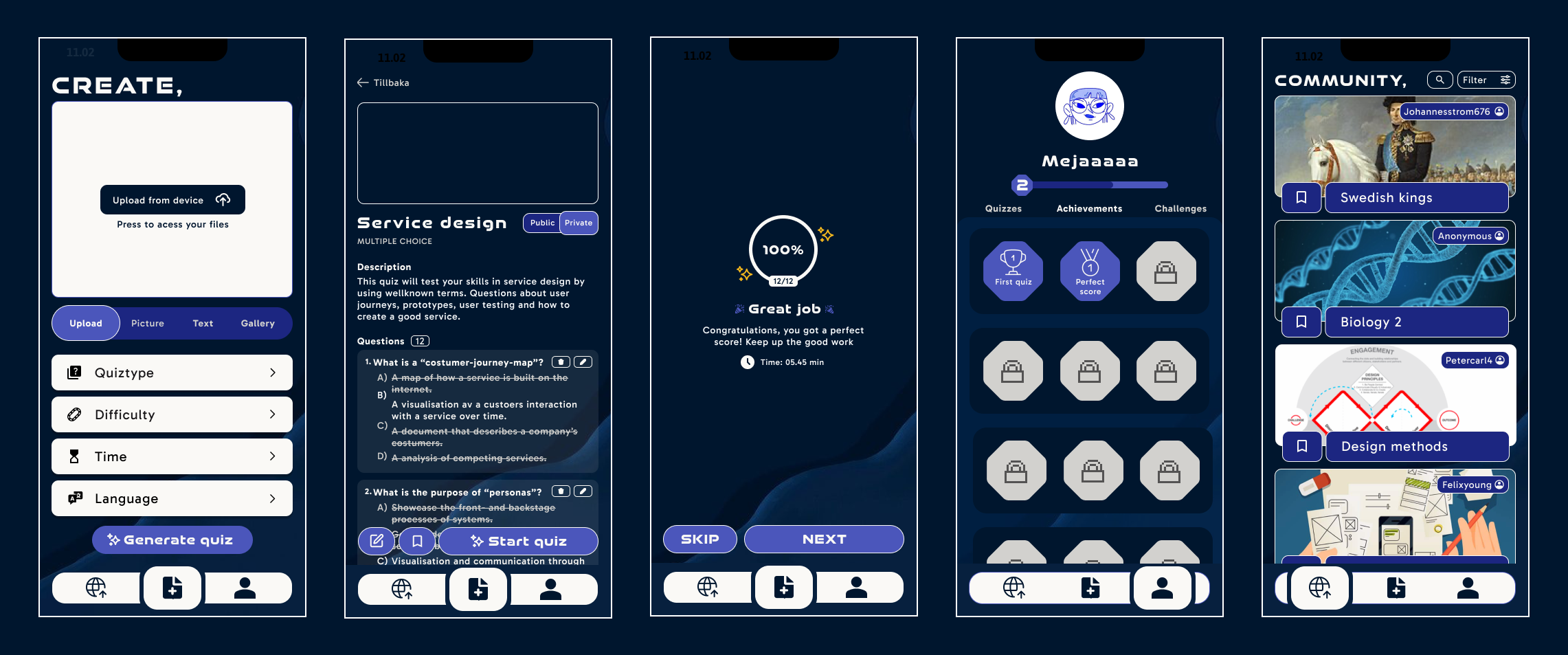
* Note that the Figma prototypes are not fully developed. 1) Create new quiz, 2) Created quiz is presented and open for edits, 3) Congratulations! You finished your first quiz, 4) Profile and personal achievements 5) Community with easy accessible quizzes.